The Educational Justice Map visualizes how opportunities and inequalities are distributed across the Chilean school system through a set of educational indicators. It aims to provide evidence that can inform policies and practices toward educational justice, foster public debate on its challenges, and track its evolution over time. Rather than simply organizing and presenting data, the site proposes an interpretation grounded in a conceptual model that understands educational justice as multidimensional and pluralist.
Communicating data about justice is not straightforward. The data is complex and often incomplete, and some realities are lived experiences and stories that no number can capture. The project therefore began with a phase of joint ideation through a series of co-design workshops with the CJE team. These workshops shaped not only how the available data would be structured, but also the questions, tensions, and sensitivities involved in visualizing justice, and from them we defined the project’s conceptualization, visual identity, and information architecture together.
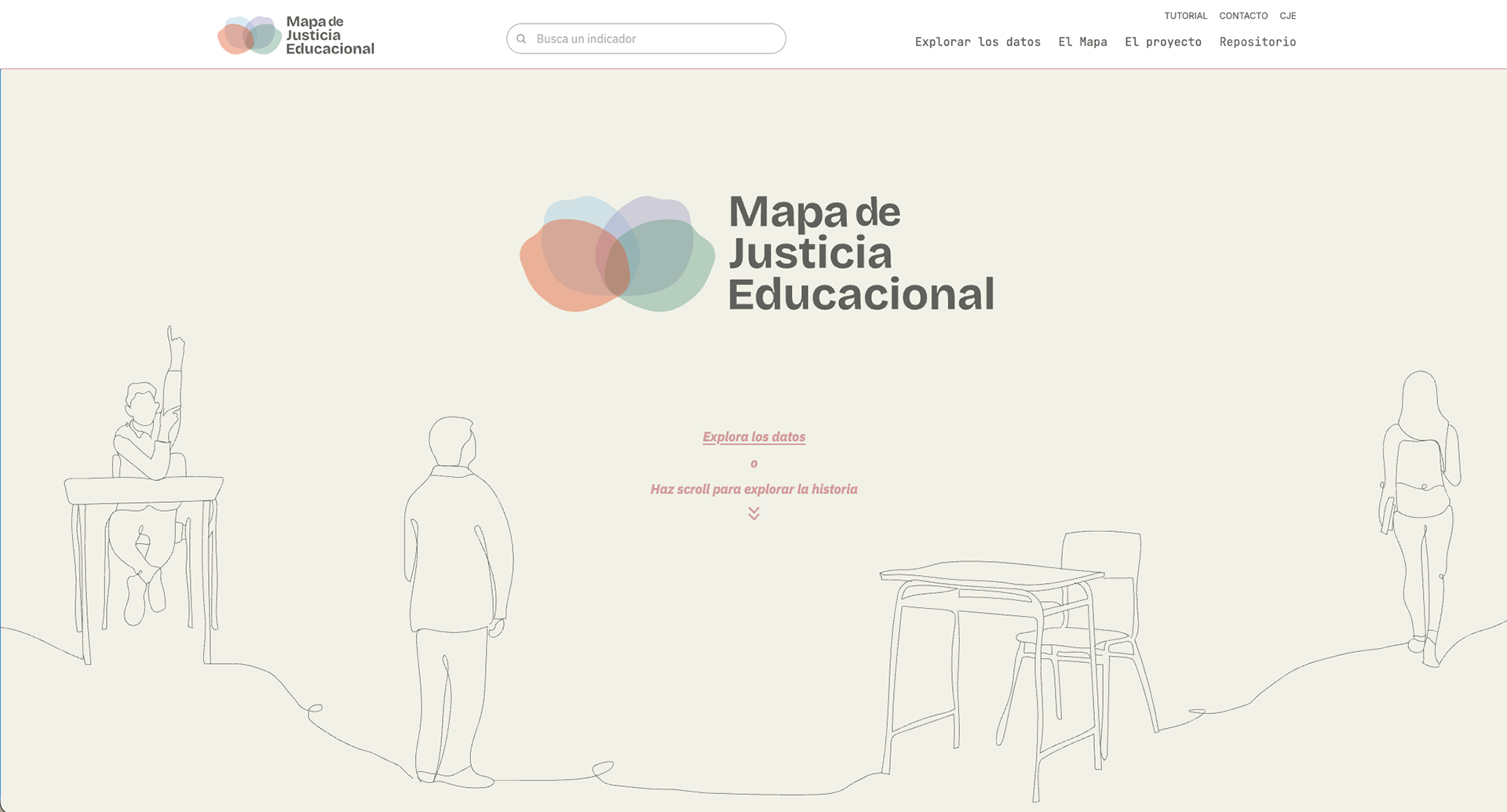
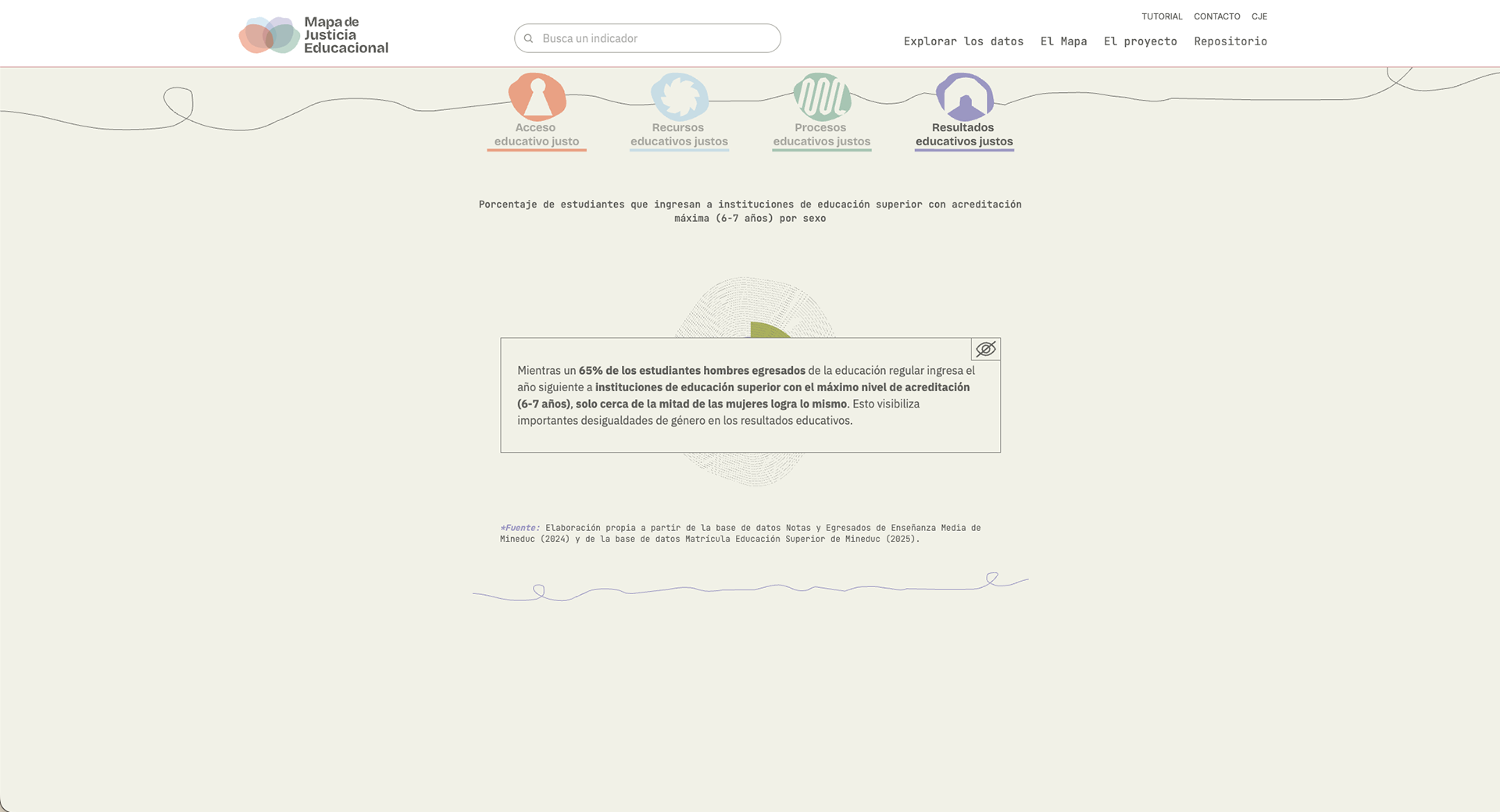
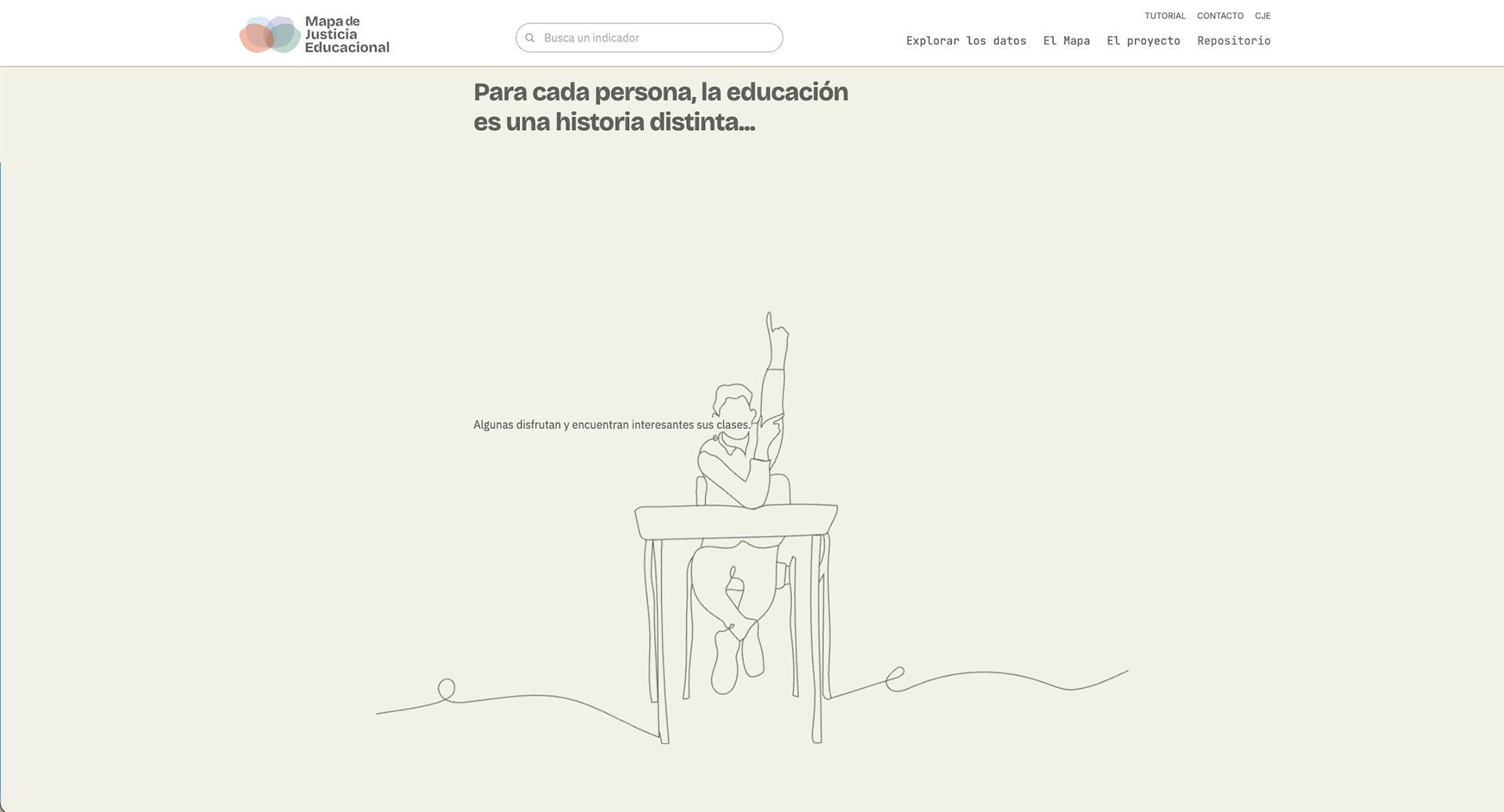
The result is a site built around a sensitive perspective, attentive both to the data that exists and to what is missing. It unfolds in two layers. The home page is more narrative, bringing the people behind the data to the foreground: they are not just numbers, they are students. The second layer is a dashboard organized by the model’s dimensions, reflecting the multidimensional reality of educational justice, where each indicator includes information on how it was built and on related studies. The work was challenging for the whole team, and also a deeply reflective process on how to visualize, and how not to visualize, justice.